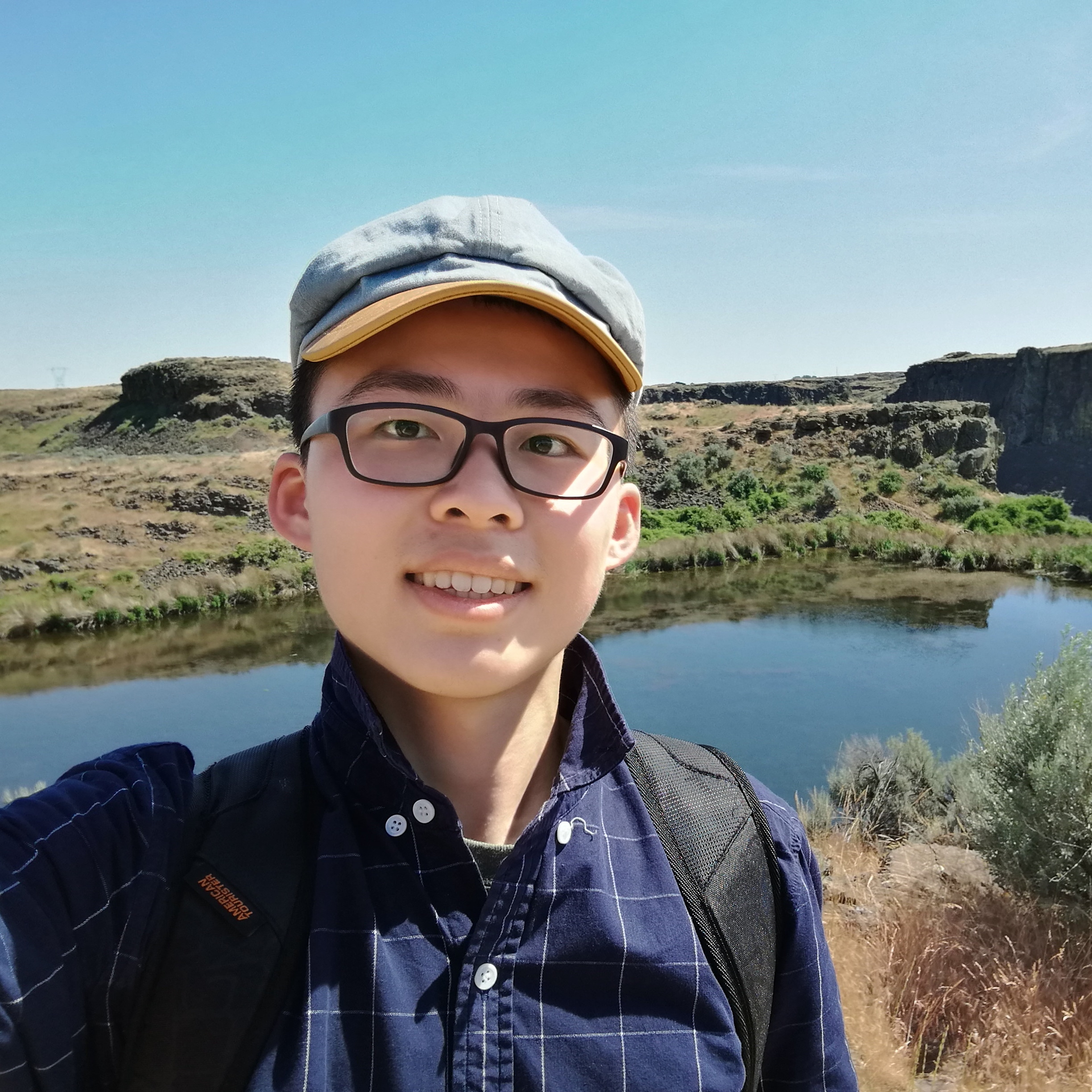
About Me:
I'm a 3rd-year PhD student in Computational and Systems Biology at Washington University in St. Louis (Dr. Keith Hengen's lab). My research is on how animals, and their brains, generate adaptive, flexible movement — a neuroscientist approach to solve the embodied AI problem.
Motivation: my lab mice can learn to hunt running cockroaches in half an hour. After killing 6–7 roaches, they become expert killing machines. The same mice can also learn to climb a ladder within the first few trials. After 50–100 traversals, they get so fast that my bare hand can hardly catch them. Today's robots cannot match this. And a mouse brain only weighs 0.5 grams, with 80 million neurons shared for vision, smell, hearing, and everything. I want to understand how biological motor systems pull this off, in precise computational terms that can eventually inform how we build machines.
What I actually do: I build automated home-cage paradigms (ladders, prey capture) that let mice voluntarily generate thousands of natural movements while I record from their motor cortex using high-density probes. I then analyze the population dynamics to figure out what network states enable rapid learning.
Recently, I found that a measurable property of the motor cortex — how close the network is to a phase transition between ordered and disordered activity, named "criticality" — predicts how fast an animal will learn a future task, whether it's ladder crossing or hunting. This holds across individual mice, and we see the same principle in human frontal cortex and in minimal artificial neural networks. It seems to be a universal factor that sets the learning rate, separate from raw ability or final performance.
My goal: to distill these biological principles into actionable insights for roboticists. If we can understand how fluid, adaptive motor control is achieved in the tiny brain of a mouse, we can build AI that moves with the same agility and efficiency.
Before my PhD, I graduated from Carleton College, MN, with majors in biology and computer science. At Carleton, I worked on marine metagenomics in Dr. Rika Anderson's lab. I also interned at the Kostic Lab at Harvard Medical School, and spent a year interning at Hewlett Packard Enterprise writing operating system patches.
Projects
- Preprint (2026): A single dynamical property can account for the capacity to learn, from artificial networks to the mammalian brain
- Poster, SfN 2025: 50,000 trials per mouse — a scalable, automated platform for longitudinal motor behavior and neural dynamics
- Paper, mSystems (2024): Increasing transposase abundance with ocean depth correlates with a particle-associated lifestyle
- Paper, Nature Communications (2024): Timing the evolution of phosphorus-cycling enzymes through geological time using phylogenomics
- Paper, Cell Metabolism (2025): Portal vein-enriched metabolites as intermediate regulators of the gut microbiome in insulin resistance
Blogs
- Sequence alignment toy — Needleman-Wunsch implemented in JavaScript.
- How the Carleton DataSquad shaped my path into research (interview).
- Career advice for data science & software engineering beginners (interviewing Maraki Ketema, Product Lead @ Microsoft).
- R programming FAQ (written for Carleton's Quantitative Resource Center).
- Tableau guides (YouTube playlist recorded for a Carleton political science class).
- SQL vs. NoSQL — what they are and how to choose